
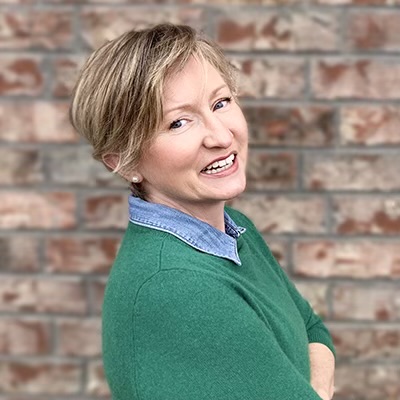
This week’s guest is Dawn Harris Wooten, a Facilitator and Program Manager located in Colorado, USA, whose passion it is to bring people closer by bridging differences between them.
She believes virtual exchange can and does act as a conduit for building bridges and she says she is very proud to consider herself a facilitator of these experiences. Another passion for her are so-called ‘brave spaces’ and we began our conversation by defining a ‘brave space’.
This week’s guest is Dawn Harris Wooten, a Facilitator and Program Manager located in Colorado, USA, whose passion it is to bring people closer by bridging differences between them.
She believes virtual exchange can and does act as a conduit for building bridges and she says she is very proud to consider herself a facilitator of these experiences. Another passion for her are so-called ‘brave spaces’ and we began our conversation by defining a ‘brave space’.
Brave Spaces
Dawn Harris Wooten – “Well, I think there are definitely different definitions based on the instructor or the program. But for me, a ‘brave space’ in virtual exchange is where I am intentionally creating an environment where the bravery is about showing your curiosity and leaning into that curiosity. It’s feeling confident and comfortable to ask a clarifying question, to ask things like, “Well, I’d like to hear more about that comment.” This is what I think of as a brave space.
A virtual safe space to me is important, but when you start a safe space, we don’t always know the background of everybody in the room. We often go with community agreements, which can be very general in the beginning and might include things like showing respect, being a good listener etc.
But what I have learned is that throughout the program, you can build upon those general community agreements, and with the group you move towards asking what that looks like in action. And to me, it’s the action that’s creating the brave space.
For example, we need to ask what respect looks and feels like. What does it look like when you show others respect? This is where I feel the brave space takes hold and takes off.
And in virtual exchange, how significant is it that facilitators build that brave space? What are the benefits of this?
Dawn Harris Wooten: “Most of the virtual exchanges that I have worked with have included very large groups of students representing 4-5 different countries. I won’t know the situation of every one of those 100 students. So building the brave space, I feel like it opens the door to allow them to also establish resiliency as they are connecting with each other, thinking about their futures, whether that’s going to college, having a career in mind, or maybe they’re going to work in their family business.
Resiliency is such a strong skill that we all need, because, as we all know, this world we’re living in is very dynamic, and often presents problems and situations that can be very heavy on the heart. So resiliency is not about merely acknowledging those things – but rather it’s about having the wherewithal to feel confident and comfortable knowing that you can move forward to talk about them, to understand them, and to be curious to learn more about the experiences of others.
Resiliency can work both ways, giving and receiving support, and once you start to understand that about yourself, and through added reflection, you may start to feel more confident in how you bridge differences with others and communicate.
I think it also builds a sense of empathy.”
We’re talking about this in the context of virtual exchange. Is this transferable to the in-person pedagogy as well and are people doing that not just in this online space?
Dawn Harris Wooten: “Oh, absolutely. So in my work as a facilitator, I am a contractor and consultant with many organisations. Most of those organisations are working through large grants that they have received to carry out cultural exchange. In some instances, the exchange is a hybrid model, where the program starts in a virtual space and then it moves to maybe two weeks of in-person exchange where the students meet each other, and then we move back to the virtual space.
I feel that brave spaces are definitely applicable to all spaces.
And the way I would maybe apply it would vary because of the tools that I’m using and the goals of the program.
Tell us a little bit about your path into this online facilitation and virtual exchange. How did you get into it?
Dawn Harris Wooten: I had been facilitating for a long time without realizing it. I think many of us have but we haven’t been using that word or claiming that as a role. I think it was once I realized that, I realised I was facilitating all along, I realised I had these tools in my toolbox.
For most of my career, I was a college advisor for international students coming into the United States to study. And so I was using a lot of facilitation and communication skills. These are skills where I would be bridging differences – but not in an aggressive or assertive way, but in a way that felt comfortable and culturally aware and providing environments that were comfortable for students. I was proud to be their navigator as they were adjusting to their life in the US.
I realised that a lot of that work is facilitation because you’re really helping someone move forward and find their way with confidence. Once I realised that I had been doing that for about 15 years, I was so excited!
From there, I deliberately started seeking out anything that said facilitation. Whether it was free trainings or not, and I googled which organisations were doing facilitation to learn more.
Then I discovered that World Learning was doing this in the virtual exchange area, and so that’s where I started thinking how I could work with them. How can I shape myself into being the kind of facilitator they need? And from there, the world just kept opening up. And part of it is because I put myself out there as a facilitator. And I am also Soliya trained too!
I am stepping into my own brave space and my own vulnerability by claiming that title.
So is there somebody who you’ve been particularly inspired by?
Dawn Harris Wooten: “There have been many, but one of the pieces of work that I really have enjoyed, and I have also been a facilitator for this person’s workshops is Dr. Loretta Ross. She wrote a book called Calling In. And in it, one of the things that she talks about is that in order to practice ‘calling in’ to bring other people into your space, you do have to look within first. You have to ‘call yourself in’ with love and grace to reflect on your assumptions and emotions in building that bridge with someone else. It’s a beautiful practice.
I’ve recently been identified as a Rotary Peace Scholar, and that will take shape this fall, when I will be living in the beautiful city of Istanbul for a few months and researching virtual exchange for youth living in the MENA region. So I’m really excited to level up my work in that way.
Lastly, I also completed a fellowship with UC Berkeley’s Bridging Greater Good Science Center, their Bridging Differences Program at the Greater Good Science Center. They have a playbook that is really dense with different strategies you can use as a facilitator to bridge those differences.”